lunes, 8 de julio de 2024

DAILY ROUTINE: BUILDING PROJECTS TO COMUNICATE IN ENGLISH

Teaching English such a second language and supporting at home is quite important and we do usually using maker methodology 

We consider it is essential because it turns language learning into a meaningful, hands-on experience. Instead of memorizing isolated vocabulary, students learn by creating and building objects that help them communicate, such as models, posters, or small projects. Inspired by John Dewey and due to our job as teachers, we reckon this approach allows children to learn by doing. When they build a model of a city, a zoo, or their dream house, they naturally use English to name objects, describe what they have made, give instructions, and present their work. The language becomes a real tool for communication, not just a school subject.


We have nice book to inspire that.


As a teacher of secondary education, I see how this methodology increases motivation, confidence, and participation in the classroom. The objects students create support their speaking, reduce anxiety, and give them something concrete to talk about. Through collaborative projects, they develop creativity, critical thinking, teamwork, and oral communication skills, all while using English in a purposeful way. Working with a maker approach helps children connect language with action, emotion, and creativity, making learning more meaningful and long-lasting.


Here some exemples of that.


jueves, 4 de abril de 2024

PRIZES. WE sometimes WIN, WE always LEARN


Álvar, 9 years,  took part in 2024 of the #MediaFestival: ‘Technology’ to go back to the Nature of Salamanca 
✨🌿


He was the very youg child, and his poster was very very basic, same as the App he explaned in the festival...But he spoke so well that day after too much train at home....of course...

NOTHING IS A COINCIDENCE...IT IS JUST WORK, WORK, WORK

Take part in this event that connects innovation and environment. Children and teenagers (9-17 years old) are invited to submit digital posters showing how technology can improve our relationship with nature.

Prizes for the best ideas and the opportunity to present them in a 90-second Elevator Pitch competition - outstanding entries will be eligible for the ‘Technology brings us back to nature’ award!
 

CHIVITEROS IN A CLICK, ÁLVAR´S POSTER


Here Álvar pitch:


viernes, 31 de julio de 2020

TOPIC: Food and manners

  • Imagine if a different animal came to tea. How would they behave? Could you write a story about this?
  • Draw the tiger and Sohie

  • Use expressions such as: hello, thanks, good bye...
  • Imagine that the tiger escaped from a zoo. Write the story that describes how he escaped.
  • What happens to the tiger next? Where does he go after visiting Sophie's house? Write a story about another adventure that he has.
  • Work with a group of friends to act out the story.  Watch this trailer for a live production of the story for some ideas:


Maths:
Create a shopping list showing all of the things that Sophie's family needed to buy to replace the things that the tiger ate. How much would each item cost?

Music

  • Can you make a song that the tiger might sing to say 'Goodbye' and 'Thank you' to Sophie's family?

jueves, 26 de marzo de 2020

Some activities at home: Reading Aloud

READING ALOUD.

Children’s literature can lead children into exploration, creativity, and english learning. As you share stories with your kids, you are building their curiosity and critical thinking skills. Finding good books can lead to rich conversations and engaging into english such a second language.

We have many books in our personal library:


viernes, 14 de febrero de 2020

Topic: Family

Family is a special topic we will work in a very close way.


NOTES: Nice book to work tdescripcions, animals and family feeling...


viernes, 9 de agosto de 2019

Young PRE- Starters at Doñinos

Hello, after too much time I am here again...

Being a young mother at full time working is very stressfull but  now  Álvar  and Martín are more independent, both  are going to start the official school. We have enlloed in the public school we have in our village. In Álvar case, it is going to be the second year at school. We are very happy with the school although the main need we have is due to the fact that it is not a bilingual school and Álvar has not progressed much in that area in relation the knowledge he adquired at kindergarden. 

At home we have read and sing  everyday in english but we consider we need  to do  more to establish daily routines to learn english in a ludic and easy way. We have though to contract private classes, but they are very young and we don´t want to enroll them in many activities and pass much time going and coming downtown from different activities.
Finally Miguel and me are going to work with them using Cambridge and own ressources we have. They are getting used to learn reading and singing beacause we have many books at home and they have usually gone to storytelling and creativity sessions at Unpuntocurioso (a great place to learn and love reading...)

The main ressources we will use are...


Activities Web:  https://www.cambridgeenglish.org/learning-english/parents-and-children/activities-for-children/pre-a1-level/

Sign and learn vídeos. 


https://www.cambridgeenglish.org/learning-english/parents-and-children/activities-for-children/sing-and-learn/


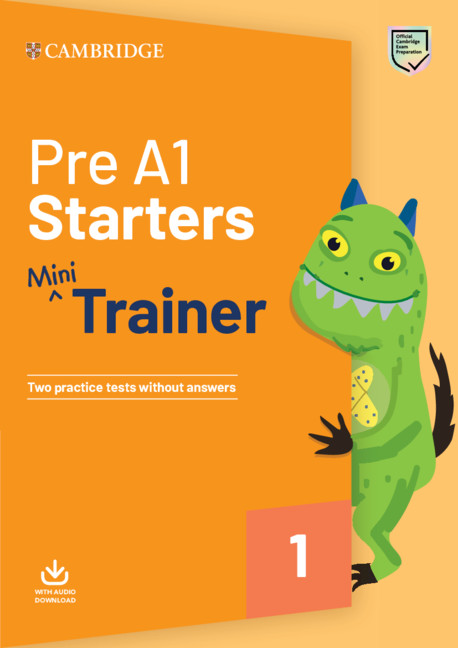
The book:


Flash Cards and objets to learn playing (in Cambridge web)

https://www.cambridgeenglish.org/exams-and-tests/starters/preparation/


To have a weekly plan we will develop one post for each topic we will work: food, colours, letters and numbers, clothes, city and home, school, animals and little expressions to say hello, good bue, thanks, please...All which is required for pre starters level.